A Day on the Baltoro Glacier: What a K2 Trek Feels Like
People ask us the same question again and again: what is the K2 Base Camp trek actually like? The photos show Concordia glowing at sunset and Karakoram giants lined up like a wall. What they do not show is the sound of ice cracking under your boots at dawn, the first sip of hot tea in the cold, or the quiet that settles over camp when the sun disappears behind a granite tower.
So let us take you through one ordinary day on the Baltoro Glacier, the way our Black Yak Adventure guides see it every season.
First, a Quick Word on the Baltoro Glacier
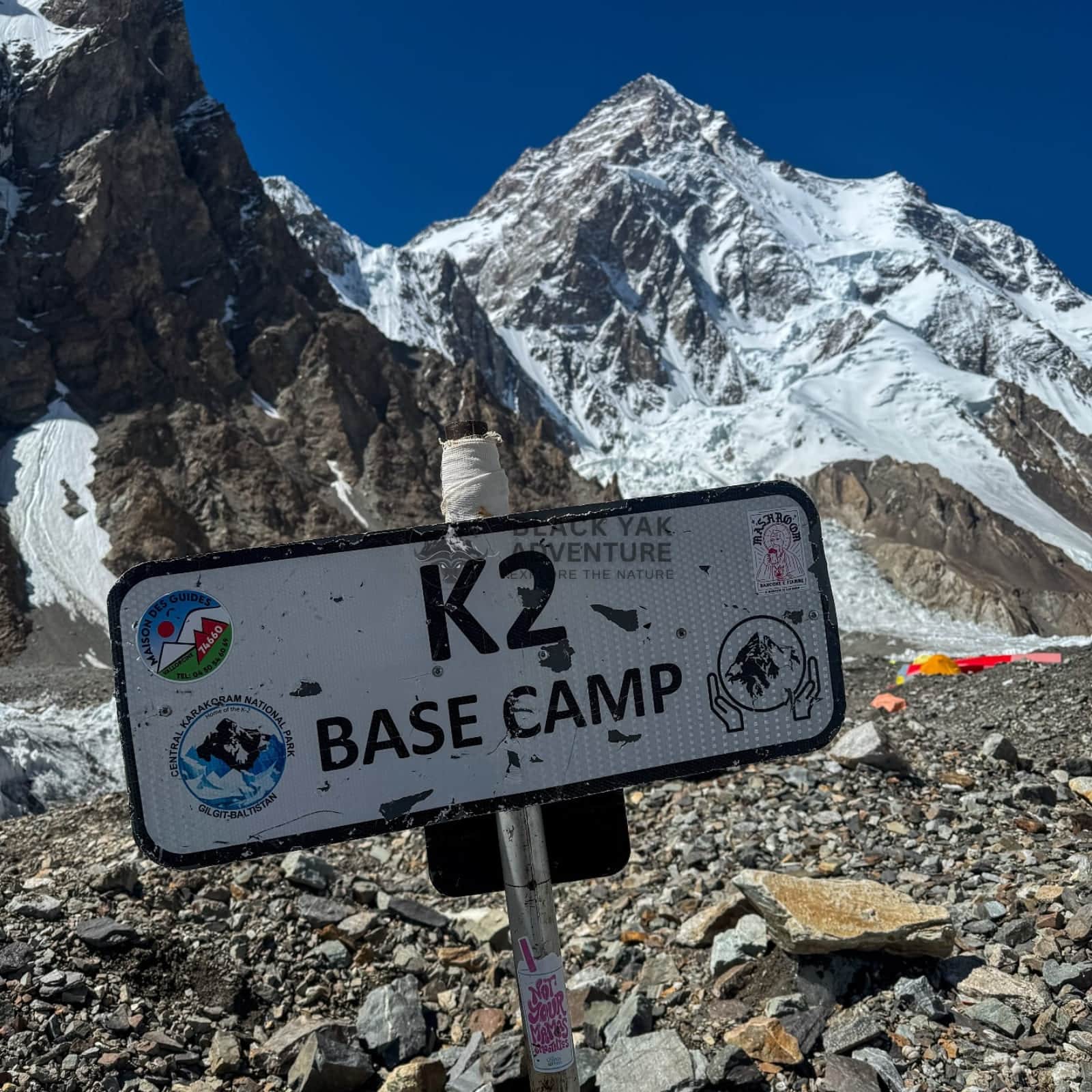
The Baltoro is one of the longest glaciers outside the polar regions, stretching roughly 60 kilometers through the heart of the Karakoram in Gilgit-Baltistan. Your K2 trek follows it from the village of Askole toward Concordia, where the ice meets and K2 finally comes into view. Most itineraries take around two weeks round trip, with rest days built in for acclimatization.
The trail is not a gentle path through meadows. It is a moving river of rock and ice. Every day is different, but the rhythm of the days is very similar. Here is one of them.
5:30 AM: Tea at Your Tent Door
You wake to the soft rustle of the camp crew and a voice outside your tent saying “chai, sir?” It is cold, often below freezing, and your water bottle may have a skin of ice. But a mug of hot tea, a bowl of warm porridge, and the first light touching the peaks changes everything.
This is the moment many trekkers tell us they remember most. You unzip the tent and the mountains are simply there, pink and gold, close enough to feel enormous.
7:00 AM: Boots On, Crampons Off (Mostly)
By seven you are packed and walking. Your porters have already shouldered the heavy loads and moved ahead, and your guide sets a slow, steady pace. Slow is the secret on the Baltoro. At altitude, the people who finish strong are the ones who never rush.
The terrain shifts constantly. You will cross loose moraine, scramble over boulders, skirt blue ice pools, and step across small streams on stones. It is physical, but it is also strangely hypnotic. After a few days your legs find a rhythm and your mind goes quiet.
10:30 AM: The Mountains Start Showing Off
Somewhere mid-morning, the scenery turns unreal. Depending on the day, you might see the Trango Towers, the Cathedral, Mitre Peak, or the sharp profile of Masherbrum. Each turn of the glacier brings a new skyline.
This is when most trekkers stop talking and start taking photos. Our guides know the best spots and the best light, and they are happy to wait while you take it all in.
12:30 PM: Lunch on the Ice
Lunch is a simple, hearty spread, usually served from a cook tent or a flat spot beside the trail: fresh bread or chapati, rice, vegetables, eggs, and plenty of tea and hydration. Appetite can drop at altitude, so we cook food that is warm, familiar, and easy to eat.
You might sit on a rock in the sun, loosen your boots, and watch a line of porters pass by with a smile and a nod. It feels, strangely, like being in the world’s most spectacular living room.
3:00 PM: Arriving at Camp
Most days end in mid-afternoon. Tents are already pitched and the crew has hot drinks ready. You rest, change out of damp layers, and write in your journal or simply stare at the peaks.
This is also when the cold returns. As soon as the sun drops, the temperature falls sharply, so a warm down jacket becomes your best friend.
6:30 PM: Dinner, Stories, and Stars
Dinner is warm and filling: soup, a main dish, and something sweet. Your guide gives a short briefing on tomorrow’s route, checks how everyone is feeling, and answers questions. Then the stories start, mountain tales from guides who grew up in these valleys and know them like their own backyard.
When you step outside afterwards, the night sky over the Baltoro is something you will not forget. With no city lights for hundreds of kilometers, the Milky Way looks close enough to touch.
What the Photos Do Not Tell You
A K2 trek is not easy, and we will never pretend otherwise. Here is the honest picture:
- It is cold. Nights at higher camps drop well below freezing.
- It is basic. Camp life means simple toilets, limited washing, and sleeping on the ground.
- It is demanding. Long days on uneven terrain at altitude test your body and your patience.
- It is worth it. Almost everyone who reaches Concordia says it was the best trip of their life.
A good level of fitness, proper acclimatization, and a trusted local team make all the difference. That is where we come in.
Why Walk the Baltoro with a Local Team
Black Yak Adventure is led by people from Gilgit-Baltistan. Our guides know the glacier’s moods, the safest routes through changing ice, and the signs of weather turning. We keep groups well paced, watch carefully for altitude symptoms, and look after our porters and crew as part of the family, because they are.
When you trek with us, you are not just ticking off a famous trail. You are experiencing the Karakoram through the eyes of the people who call it home.
Ready to Walk Your Own Day on the Baltoro?
If this made you want to lace up your boots, we would love to help you plan your K2 Base Camp trek. Whether you want a classic Concordia itinerary or a longer expedition, our team will guide you through the route, season, permits, and preparation.
[Explore our K2 Base Camp Trek →] | [Contact Black Yak Adventure →]
Recent Posts
7 Best 7,000m Peaks in Pakistan for Aspiring Mountaineers
A Day on the Baltoro Glacier: What a K2 Trek Feels Like