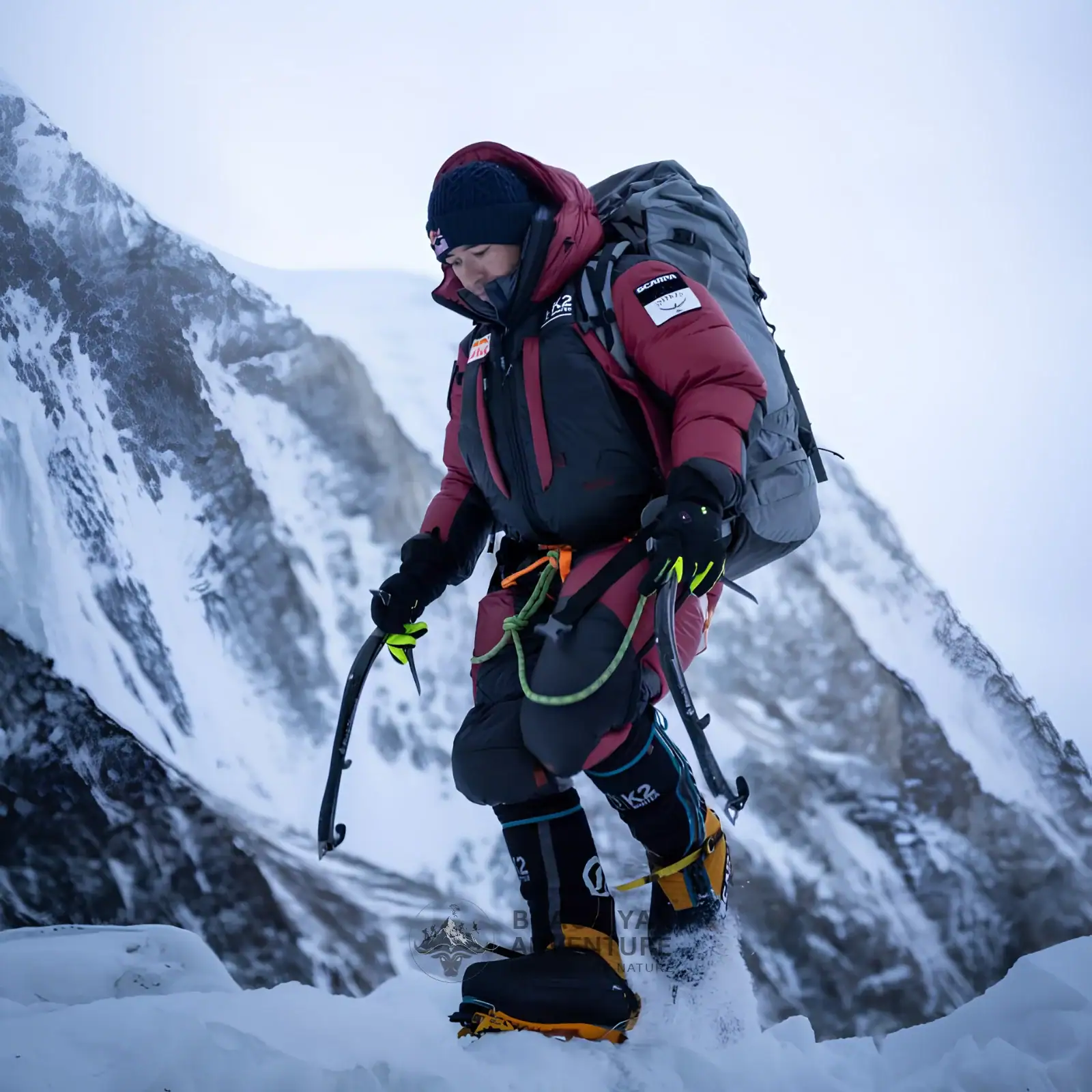
Nims Dai: The Man Who Redefined What’s Possible on the World’s Highest Peaks
Every few decades, a climber comes along who makes the mountaineering world rethink its limits. In recent years, that climber is Nims Dai, known officially as Nirmal Purja. His name is now tied to some of the boldest moments in high-altitude history, and many of them happened in the Karakoram of Gilgit-Baltistan, the same mountains we call home at Black Yak Adventure.
Who Is Nims Dai?
“Dai” means “elder brother” in Nepali, a title of respect, and it stuck to Nirmal Purja the way a nickname sticks to someone everyone trusts. Born in 1983 in Dolpa, in western Nepal, and raised in Chitwan, he joined the British Army’s Gurkha regiment in 2003. He later became the first Gurkha to serve in the elite Special Boat Service (SBS), the Royal Navy’s special forces unit. That background in endurance, discipline, and risk management would shape the way he approached the world’s highest mountains.
Project Possible: All 14 Eight-Thousanders in Under Seven Months
In 2019, Nims Dai launched Project Possible, an audacious plan to climb all 14 mountains above 8,000 meters in just seven months. The previous record stood at nearly eight years. Most of the climbing community considered his target unrealistic.
He began with Annapurna in April 2019 and finished on Shishapangma in October 2019, completing all 14 peaks in 6 months and 6 days. Along the way he did things that sounded impossible on paper, including climbing Everest, Lhotse, and Makalu within a very short window in May.
Five Karakoram Giants in Three Weeks
For anyone who loves Pakistan mountaineering, the Pakistan leg of Project Possible is the most remarkable chapter. In July 2019, Nims Dai climbed five of Pakistan’s 8,000-meter peaks in roughly three weeks:
- Nanga Parbat (8,126 m), the “Killer Mountain”
- Gasherbrum I (8,080 m)
- Gasherbrum II (8,035 m)
- K2 (8,611 m), the Savage Mountain
- Broad Peak (8,051 m)
This was a showcase of how much the Karakoram demands. Between summits he moved through the Baltoro region, relied on helicopter and ground logistics, and worked with local teams in Gilgit-Baltistan. It showed the world that this region holds some of the most concentrated high-altitude climbing on the planet.
The First Winter Ascent of K2
If the 14-peak project made Nims Dai famous, K2 in winter made him a legend. For decades, K2 was the last 8,000-meter peak never climbed in the cold season. Winter on K2 means temperatures far below minus 50°C with wind chill, brutal winds, and short, unforgiving weather windows.
On 16 January 2021, a team of ten Nepali climbers led by Nims Dai and including Mingma G, Dawa Temba Sherpa, and other Sherpa mountaineers reached the summit. In a moment that moved the climbing world, they paused just below the top so they could step onto it together, and sang the Nepali national anthem. It was the first time anyone had stood on K2 in winter.
That winter season also carried deep sorrow for the Pakistani mountaineering community. Muhammad Ali Sadpara, one of Pakistan’s greatest high-altitude climbers, was lost on K2 along with John Snorri Sigurjonsson and Juan Pablo Mohr. The mountain gives and takes, and honoring those who didn’t come home is part of respecting the Karakoram.
The Everest Photo and the Netflix Film
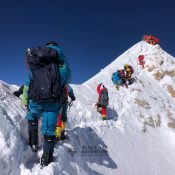
In 2019, a photo of a long line of climbers queuing near the Everest summit, taken by Nims Dai, spread across the world’s media. It sparked a global conversation about overcrowding, safety, and commercial expeditions on the highest peak on Earth.
His journey was later told in the Netflix documentary 14 Peaks: Nothing Is Impossible (2021), which brought 8,000-meter climbing to millions of people who had never thought about the Himalaya or Karakoram. For many viewers, it was the first time they heard of K2 Base Camp or the Baltoro Glacier.
Recognition and Controversy
Nims Dai was awarded an MBE (Member of the Order of the British Empire) in the UK for his achievements. As with any figure who breaks records so dramatically, his career has also drawn debate in the climbing community, including questions about supplemental oxygen use, helicopter logistics, and how records should be measured. Those debates are healthy, and they remind us that mountaineering is as much about ethics and style as it is about summits.
What Nims Dai Teaches Us About Mountaineering
Beyond the records, a few lessons stand out for any aspiring climber:
- Preparation beats bravado. Behind every headline summit were years of training, planning, and a strong team.
- Local mountain people are the backbone of high-altitude climbing. Sherpa, Balti, and Hunza climbers and high-altitude porters carry the knowledge, the loads, and often the risk.
- Mental strength matters as much as physical strength. Altitude punishes doubt.
- Respect the mountain. Even the strongest climbers turn back, and the best ones know when.
Inspired by Nims Dai? Start Your Own Karakoram Journey
You don’t need to climb 14 peaks to experience the magic of the Karakoram. The same landscapes that shaped Nims Dai’s story are open to trekkers and mountaineers of many levels:
- K2 Base Camp Trek: walk the Baltoro Glacier beneath Broad Peak, the Gasherbrum group, and the Savage Mountain itself.
- Nanga Parbat and Fairy Meadows Trek: a gentler adventure with a close view of the Killer Mountain.
- Broad Peak and Gasherbrum expeditions: for climbers ready for 8,000-meter objectives.
At Black Yak Adventure, our locally led team of Gilgit-Baltistan guides grew up in these valleys. We plan K2 expeditions, Karakoram treks, and Pakistan mountaineering tours with safety, fair treatment of porters, and real mountain knowledge at the center of everything we do.
Ready to walk in the footsteps of legends? Contact Black Yak Adventure to plan your trek or expedition in Gilgit-Baltistan.
Recent Posts
7 Best 7,000m Peaks in Pakistan for Aspiring Mountaineers
A Day on the Baltoro Glacier: What a K2 Trek Feels Like